E2A 2026
Ghana Statistical Service Participates in the Evidence to Action (E2A) Conference and Exhibition 2026
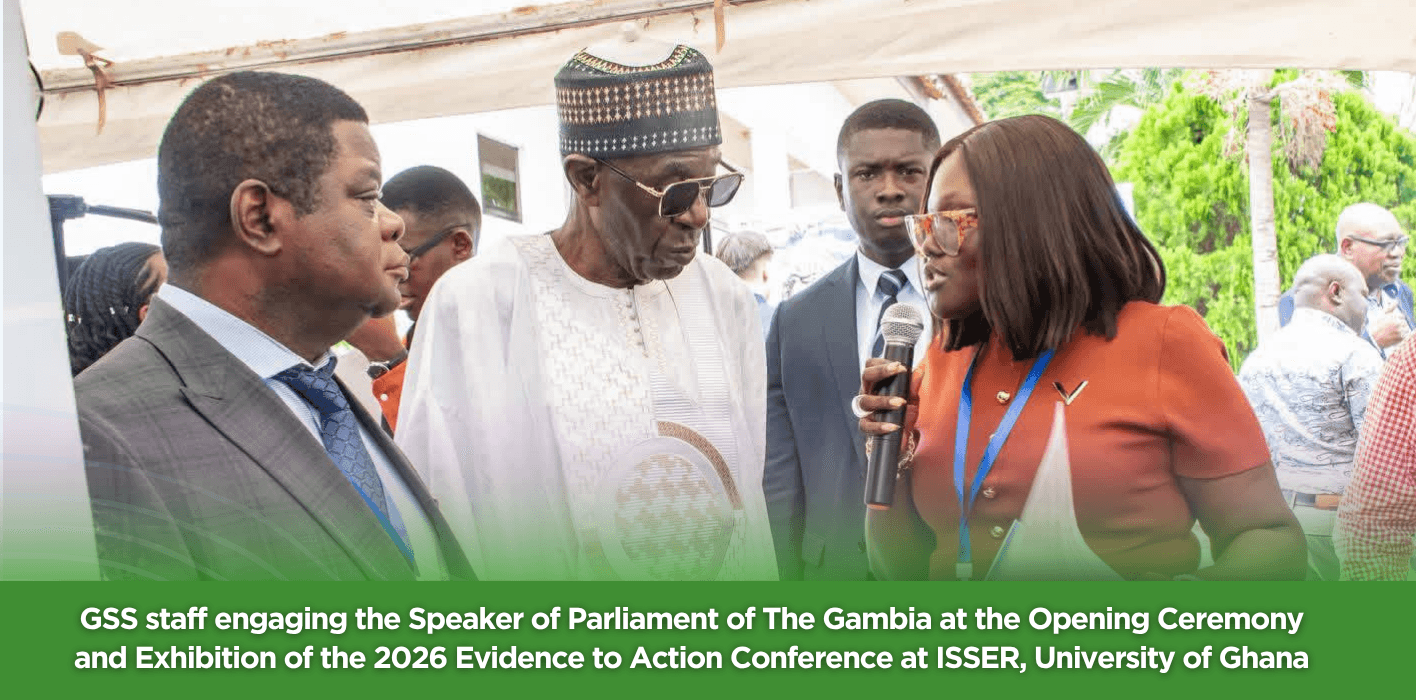
The Ghana Statistical Service (GSS) is participating in the Evidence to Action (E2A) Conference and Exhibition 2026, being held from 24–26 June 2026 at the ISSER Conference Hall, University of Ghana, Legon. Organised by the International Centre for Evaluation and Development (ICED) in collaboration with the Institute of Statistical, Social and Economic Research (ISSER), the conference is under the theme, Reimagining the Evidence-Informed Policy and Decision-Making Ecosystem in Africa. The event brings together policymakers, national statistical offices, researchers, development partners, academia, civil society organisations and evidence practitioners from across the continent to strengthen the use of evidence in public policy and development planning.
The conference seeks to promote an Africa-led evidence ecosystem by strengthening collaboration among governments, researchers and development partners, documenting successful evidence-informed practices, fostering innovation, and advancing practical approaches that translate research and official statistics into effective policies and measurable development outcomes. It also provides a platform for participants to exchange experiences, identify common challenges and co-create solutions that will strengthen governance and sustainable development across Africa.
Participants are drawn from several African countries, including Ghana, Kenya, Uganda, Tanzania, Cameroon, The Gambia, Somalia, Guinea, Zambia, Senegal, Ethiopia, Nigeria and Sierra Leone, among others. By bringing together experts and decision-makers from across the continent, the conference promotes peer learning, regional collaboration and the sharing of best practices in evidence-informed policymaking. It also creates opportunities to build partnerships, strengthen institutional capacity, improve national statistical systems and enhance the use of quality data in addressing Africa's development priorities.
For Ghana, the conference provides an important opportunity to showcase the country's progress in the production and dissemination of official statistics while strengthening collaboration between data producers, policymakers and development partners. It also enables the Ghana Statistical Service to learn from innovative approaches adopted by other African countries, deepen regional partnerships and reinforce its commitment to providing timely, reliable and relevant statistics to support evidence-based policymaking and national development.